A practical research roadmap for reducing land-based pollution and strengthening coral reef resilience
Michelle Devlin, Devin Rowell, Alexandra Steckbauer and Amelia Wenger,
Cefas, The University of Queensland, CORDAP, Wildlife Conservation Society, The Nature Conservancy
Improving coastal water quality is one of the most practical local actions available to help coral reefs cope with a changing climate. The new CORDAP roadmap asks where research and innovation can make the biggest difference. It also contributes to the United Nations Decade of Ocean Science for Sustainable Development (2021–2030) through the Nutrient Pollution Global Action Network, an endorsed Ocean Decade programme.
Coral reefs support fisheries, tourism and coastal livelihoods, protect coastlines from storms and erosion, and have enormous ecological and cultural value. Yet they are increasingly under pressure. Climate change is the greatest long-term threat, while land-based pollution can make reefs less able to withstand and recover from bleaching, disease and other disturbances.
Wastewater from towns and settlements, nutrients and sediments from agricultural land, and pollution carried through rivers and groundwater can all reach coastal waters. Cleaner water cannot remove the threat from ocean warming, but it can improve the conditions in which reefs recover while also supporting public health, fisheries, recreation and coastal communities.
A catchment-to-reef problem
One of the central messages from the roadmap is that protecting coral reefs requires us to look beyond the reef itself. Pollution does not recognise the boundaries between farms, towns, rivers, estuaries and the sea. A nutrient applied to a field, sediment washed from exposed soil, or wastewater entering groundwater may travel many kilometres before reaching a reef.
Effective management therefore needs to follow the whole journey: where pollution comes from, how it moves, where sensitive ecosystems are exposed, what intervention can reduce that exposure, and how monitoring can tell us whether the intervention worked.
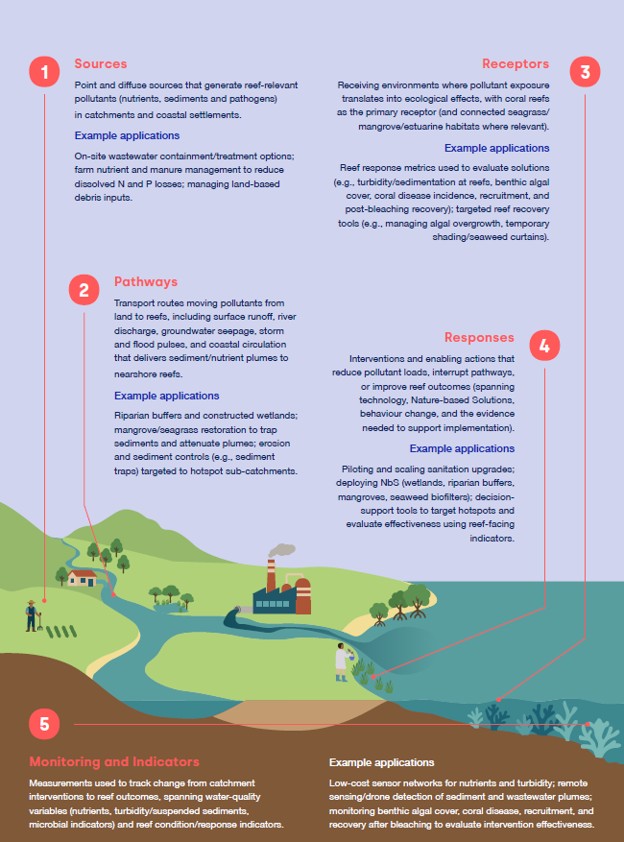
The roadmap follows five linked elements across the catchment to reef system.
- sources, where pollutants are generated,
- pathways, how runoff, rivers, groundwater and coastal circulation move them
- receptors, where exposure translates into ecological effects,
- responses, interventions that reduce loads, interrupt pathways or improve outcomes
- monitoring and indicators - measurements that show whether change is happening (Figure 1)
Building the roadmap together
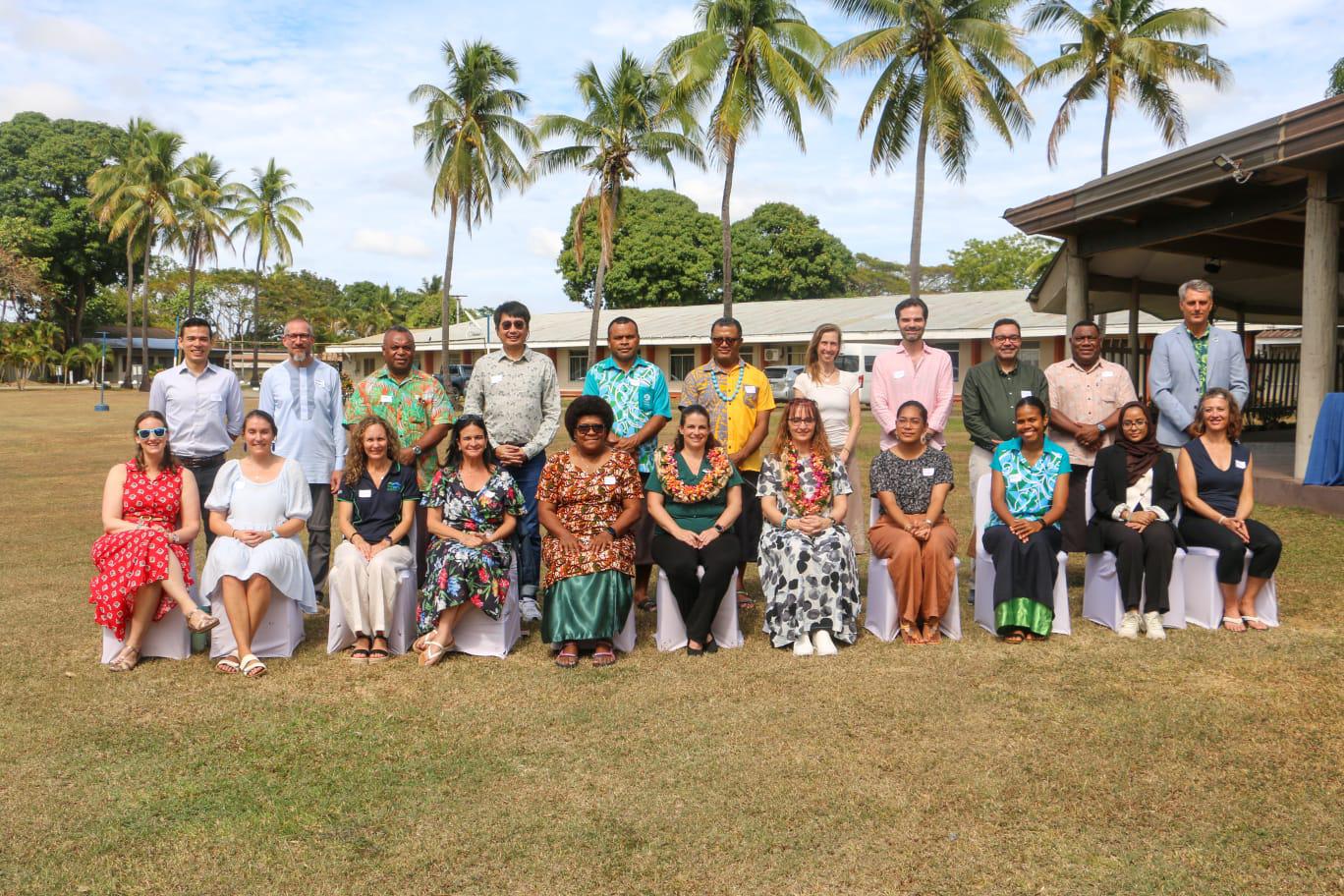
The roadmap grew from an international Water Quality Solutions for Coastal Habitats workshop held in Fiji in October 2025. Researchers, government representatives, practitioners, community organisations and technical specialists from across the world worked together to test assumptions, identify the most important evidence gaps and focus on research that could lead to practical implementation.
Priorities were assessed against feasibility, likely impact and cost-effectiveness, with additional consideration of scalability and equity. Three connected areas emerged for innovation and investment: (1) improving sanitation and reducing wastewater pollution, (2) connecting agriculture, catchment and reefs through integrated land-sea management, and (3) effective Nature-based Solutions to improve coral reef water quality.
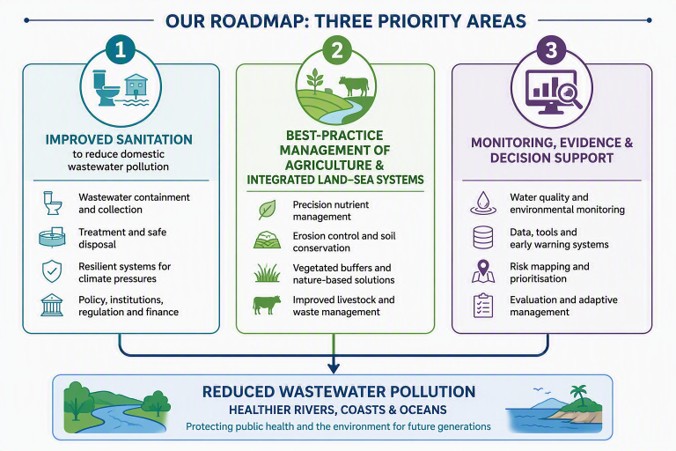
Priority Area 1: Improved sanitation to reduce domestic wastewater pollution
Wastewater can carry nutrients, organic matter and disease-causing microorganisms into groundwater, rivers and coastal waters. In many reef regions, sanitation systems have been designed mainly around human health and service delivery, with less attention paid to protecting sensitive downstream ecosystems.
The roadmap calls for better tools to quantify how much wastewater pollution reaches the sea, identify which reefs are most exposed, and measure the ecological improvement that follows investment in better sanitation.
It also highlights the need for discharge standards and water-quality guidelines that reflect the sensitivity of receiving ecosystems, not just the performance of the treatment system itself.
These wider benefits matter. Better sanitation can reduce disease risk, improve coastal water quality, protect fisheries and recreation, increase water security, and ease pressure on reefs. Considering these benefits together can change how wastewater investment is valued.
Priority Area 2: Best practice management of agriculture and integrated land-sea systems
Agricultural pollution is often harder to manage because it is diffuse. Nutrients, pesticides and sediments can originate across large areas and move through many pathways. Storms can rapidly push pollutants downstream, groundwater can carry less visible pollution loads, and nutrients stored in soils and sediments may continue to affect water quality long after management changes.
The roadmap therefore emphasises pollution hotspot mapping, load apportionment and improved modelling to understand where, when and how pollution reaches reefs.
It also calls for practical trials of precision nutrient management, smarter irrigation, manure treatment, erosion control and other practices that reduce losses from farms.
The key test is not simply whether a practice reduces runoff at the farm boundary. It is whether that reduction can be connected to lower pollution loads downstream and, ultimately, to better conditions at the reef.
Priority Area 3: Effective Nature-based solutions to improve coral reef water quality
The third priority asks how natural systems can help. Wetlands, riparian vegetation, mangroves and other natural or restored ecosystems can intercept nutrients and sediments before they reach the sea. Living shorelines can reduce sediment resuspension, while carefully designed coastal systems may help treat pollution close to where it enters marine waters.
Nature-based solutions are attractive because they can deliver several benefits at once: cleaner water, habitat creation, carbon storage, biodiversity gains, coastal protection and greater climate resilience.
The roadmap calls for field trials that show what works, where it works, how systems perform during storms, what maintenance they need and whether reductions in pollution lead to measurable improvements in coral condition. It also highlights the need for reef-ready monitoring, reporting and verification so that benefits can be demonstrated consistently and compared across sites.
Monitoring the whole system
That connection requires monitoring from land to sea. Conventional sampling can increasingly be combined with low-cost sensors, satellites, drones and better data platforms. The aim is to link farm actions to catchment loads, reef exposure and ecological response, rather than creating separate datasets that never quite meet in the middle.
For reefs, monitoring therefore needs to combine water-quality measures such as nutrients, turbidity, suspended sediments and microbial contamination with ecological response, including algal cover, coral disease, recruitment and recovery following bleaching. New sensors, remote sensing and integrated data tools can help, but their value is greatest when they are designed around a clear management decision rather than simply generating more data.
From better monitoring to better decisions
A common thread runs through all three priorities: we need to become better at connecting action with outcome. A wetland may capture nutrients. A farmer may reduce fertiliser losses. A community may upgrade wastewater treatment. Those are important achievements, but the real management question is whether less pollution reaches coastal waters and whether the ecosystem responds.
Science is only part of the solution
One of the clearest lessons from developing the roadmap is that technology alone will not solve the problem. A technically excellent wastewater system achieves little if communities cannot afford to maintain it. An effective agricultural practice will have limited impact if farmers lack the support or incentives to adopt it. A successful Nature-based solution at one pilot site will not transform coastal water quality if there is no route to finance and scale it.
Policy, governance, finance, capacity and community involvement therefore sit alongside the scientific priorities. In many coral reef regions, particularly Small Island Developing States (SIDS), the challenge is not simply the absence of solutions. It is creating pathways that allow good ideas and successful pilots to become sustained programmes with the institutions, finance, skills and monitoring needed to last.
That also changes the way research should be designed. The roadmap places strong emphasis on co-design with communities, indigenous partners, governments, researchers, businesses and civil society. Bringing these perspectives together from the beginning makes it more likely that a solution will be technically effective, locally appropriate, affordable and maintainable.
A roadmap for action
Improving water quality cannot remove the threat from a warming ocean, but it can give reefs a better chance. Reducing sewage pollution, keeping nutrients and sediments on land where possible, restoring natural buffers, targeting interventions to the places that matter most, and improving the way we monitor the journey from catchment to coast are all actions that can be taken now.
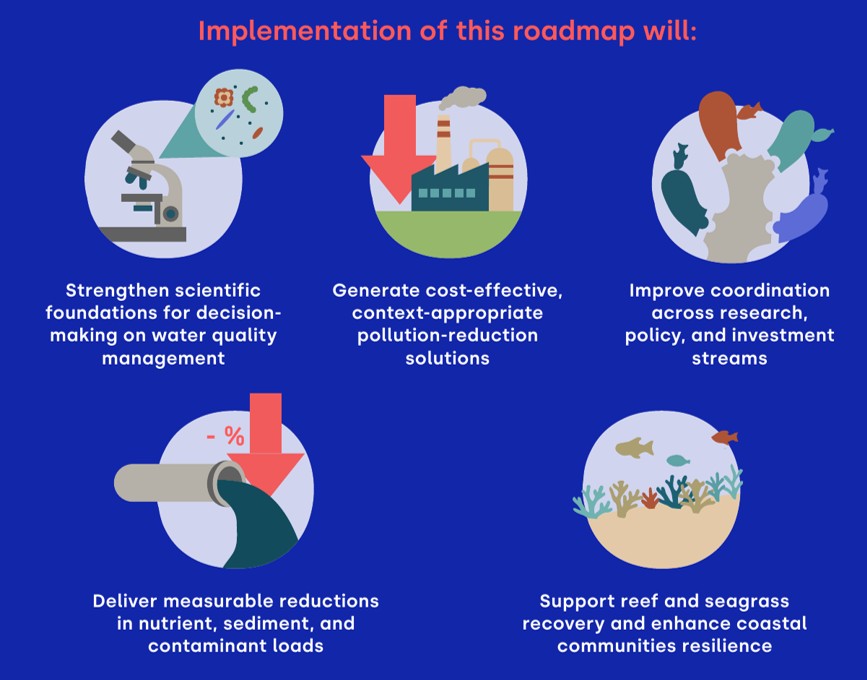
The roadmap shifts the conversation from documenting pollution towards solving it. Its ambition is to strengthen the science behind water-quality decisions, generate practical and cost-effective interventions, improve coordination between research, policy and investment, deliver measurable reductions in pollution, and support the recovery and resilience of coral reefs and the communities that depend upon them. Through the United Nations (UN) Ocean Decade-endorsed Nutrient Pollution Global Action Network, the roadmap will also support the Ocean Decade’s ambition to deliver the science and solutions needed for a clean, healthy and resilient ocean.
Read the roadmap to find out more.
Healthy reefs begin long before we reach the coast and are built through collective action across the entire source-to-sea journey.
Acknowledgements
This roadmap was developed through a collaborative partnership supported by the UK Department for Environment, Food and Rural Affairs (Defra) through Cefas' Marine Systems Programme (MSP), and by the G20 Coral Research and Development Accelerator Platform (CORDAP), the Wildlife Conservation Society (WCS), and The Nature Conservancy (TNC). We gratefully acknowledge the contributions of all co-authors, reviewers, members of the organising committee, and workshop participants whose expertise, insights, and commitment helped shape the development of this roadmap and its research and development priorities. Their collective knowledge and experience were instrumental in ensuring that the roadmap reflects both scientific evidence and practical implementation needs across diverse coral reef and coastal management contexts