Marine science is one of the least ethnically diverse degree subjects in the UK according to a recent review of UCAS data (Ford et al., 2023). This low uptake at university level is reflected in recruitment into the sector, with data revealing environmental careers to be among the least ethnically diverse in the UK. Reports from SOS-UK, a student-led sustainability charity, show only 4.81% of individuals in UK environment professions identifying as Black, Asian or other ethnically minoritised group, falling below the 12.64% average across all professions. As individuals progress along the career pipeline, the problem only amplifies, with poor retention rates and low percentages of higher level and senior leadership roles filled by ethnically diverse individuals.
A perception problem and a pipeline problem
The reasons behind these figures are complex and likely multifactorial, but research points to some consistent themes. Many young people from ethnically minoritised backgrounds simply don't see marine science as a career that is for them. A survey of marine science course leaders in the UK found that 86% agreed there is a problem recruiting ethnically minoritised students, with the overwhelming majority believing this directly impacts diversity in marine science careers (Ford et al., 2023). Course leaders pointed to a lack of role models, limited careers information in schools, perceived barriers around fieldwork and salaries and a lack of family or peer support for what is perceived to be a non-traditional career path. Children as young as ten begin to identify as "non-STEM" and without visible role models who reflect their own backgrounds, many never even consider pursuing a career at sea, in a lab, a policy team, or a data science unit. During a recent school visit, we asked students to draw a scientist before and after meeting the Cefas team. Before the visit, the drawings were all very similar- a familiar stereotype appearing in most cases. By the end of the morning, the pictures looked very different. This small activity speaks volumes about how quickly perceptions can change when young people are given the chance to see science differently.
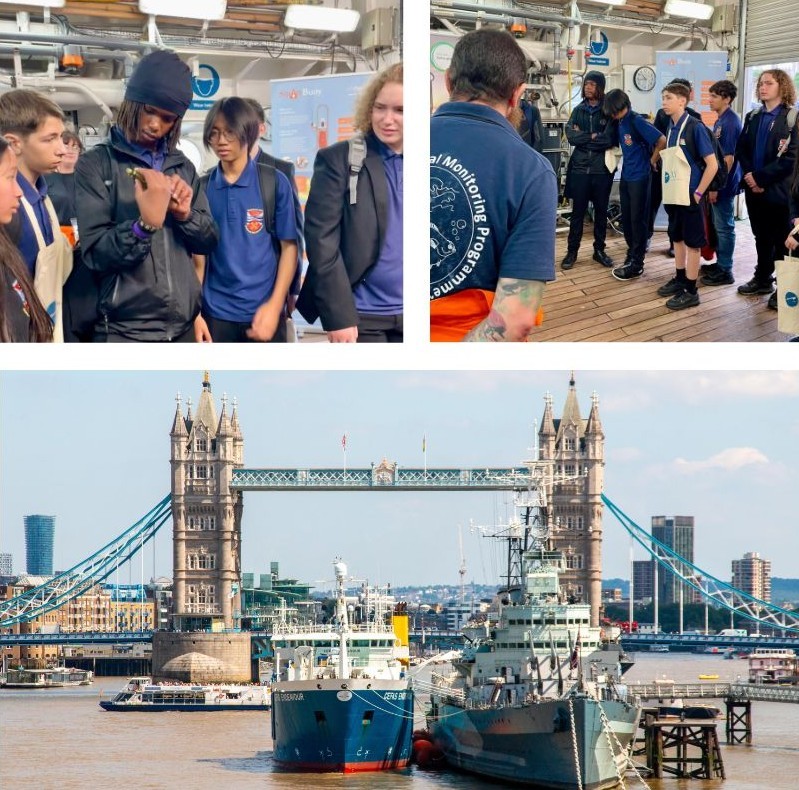
Last summer, we had the opportunity to take this work further. The RV Cefas Endeavour sailed up the River Thames as part of Future Ocean 25, a conference bringing together leading voices in aquatic science. We invited over 50 students from four schools, three in London and one in East Anglia, on board for a tour, giving them a first-hand look at life on a research vessel and the science that happens at sea. Post-visit evaluation showed that 72% of students were considering or open to considering a career in aquatic science, and every single student reported learning something new about Cefas and the work we do. For many, it was their first time stepping aboard a vessel like the Endeavour, an experience that may have reshaped how they saw their place within marine science.
Bringing marine careers to life: our new resources
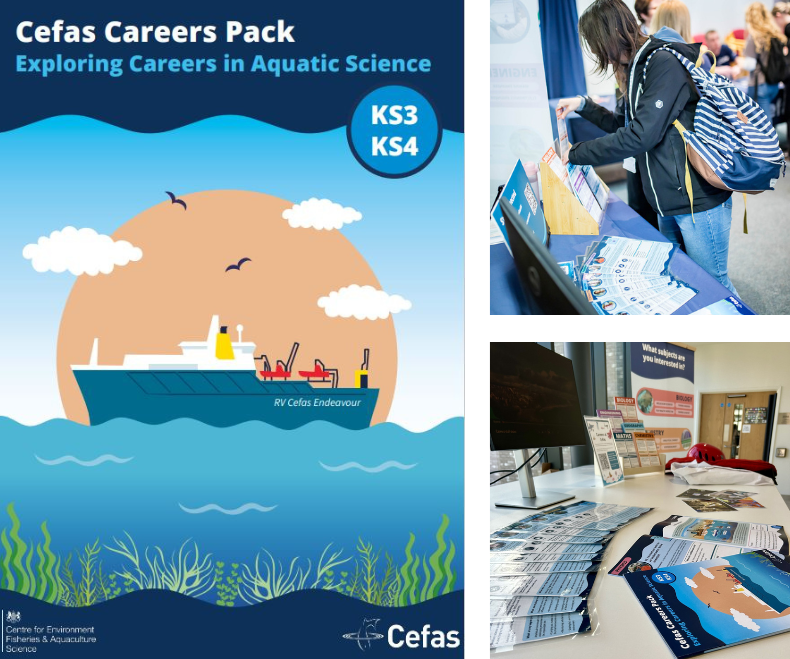
To help further address this, Cefas has developed a suite of careers videos and resources designed to showcase the breadth and diversity of careers in aquatic science. The careers pack: Exploring Careers in Aquatic Science, features 10 individuals working across a range of roles, from benthic taxonomists and marine engineers to fish health inspectors and computer scientists. Each individual shares their diverse pathways, success and challenges, offering advice to their younger selves and speaking passionately about what motivates them to follow careers that help protect our essential aquatic environments for generations to come.
Why representation changes everything
Our rivers, seas and ocean face a challenging and uncertain future. To tackle the complex and multi-level issues facing our natural world, it is imperative that we open doors now to ensure that diverse teams are working together to find effective and innovative solutions. Research consistently shows that diverse teams make better decisions and are more innovative. The same principle applies to tackling the scale of environmental challenges we face. When young people can see themselves reflected in the scientists, engineers and advisers shaping our relationship with the ocean, the ramifications reach far beyond any single career choice. As Ford et al. (2023) note, increasing diversity in marine science is not just a matter of fairness, it improves the science itself.
How to use these resources
The careers pack and videos are freely available and have been designed with teachers and careers advisers in mind. Each role profile includes information about relevant qualifications, entry routes and day-to-day responsibilities, making it straightforward to use in PSHE lessons, careers sessions or form time. The resources are mapped to national curriculum objectives and there is no single "right" pathway shown. Whether a student is considering A-levels, a T-level, an apprenticeship or a degree, there is a route into aquatic science for everyone.
Looking ahead
These resources are just one step in a longer journey. Alongside partners including the National Oceanography Centre, we are committed to building a more inclusive pipeline into marine science. We would love to hear your thoughts. If you are a secondary school careers lead, teacher, or school staff member, please share your perceptions in this survey to help us understand what schools and young people need from careers resources and activities.